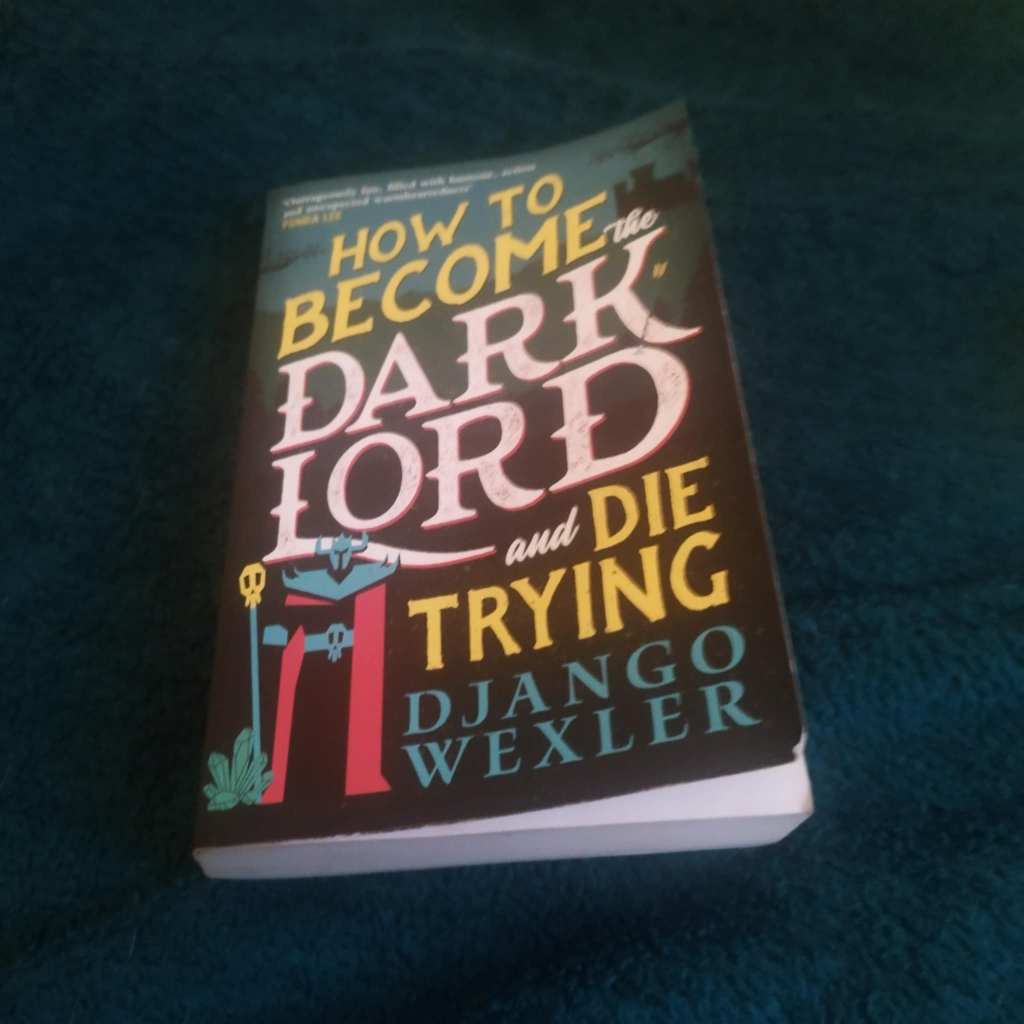
• How to Become the Dark Lord and Die Trying Review.

    Recently I wrote about my ongoing Christmas tradition of the Christmas book fund. One of the books I was looking forward to reading the most from the 2024 fund was How to Become the Dark Lord and Die Trying, which I pre-emptively described as looking “like a lot of fun”. Having now read the book; I now realise that it far exceeds my expectations. Brilliantly funny, devilishly vulgar, and surprisingly emotional at times, this time-twisting, genre breaking adventure will leave you laughing and crying throughout as the Dark Lord-in-waiting Davi travels across deserts and mountains, gets dragged into political schemes and deadly battles, and adds more varied and bizarre allies to her ever-increasing horde. It even has footnotes![1]

    The greatest strength of How to Become the Dark Lord and Die Trying is how it subverts and satirises many tropes of the fantasy genre. The prophesised Chosen One, destined to save the world, is quickly discarded as Davi, jaded by countless attempts to fulfil this apparent destiny, decides to become the Dark Lord that she has been attempting to stop from rising for centuries instead. The regular dynamic between humans and orcs is flipped as the orcs (and a myriad of other creative fantasy races and cultures) become the focus of the story. Throughout the story many of these characters become friends, lovers and enemies to Davi as the orcs are given character arcs and motivations normally reserved for the humans in these adventures. Alternatively, the humans take the role normally reserved for the orcs in a fantasy narrative. An unstoppable force of destruction, humans are feared and mythologised by some of the orcs, and other fantasy races, to the point where they can meet a human character in Davi and not realise that they are in fact talking to a human, due to the exaggerated nature in which their horror stories depict them.

    Davi herself is a fascinating character. Inspired by the isekai[2] trend in anime, Davi is an anachronistic blot in the pages of the high fantasy world she has found herself in. Ever cracking jokes and making cultural references that naturally go straight over the head of any other character, Davi’s fourth wall breaking narration is one of the funniest I have read in a long time. However, the character is much more complex than just jokes and references. Thousands of years of deaths and heartbreaks, the trauma of repeated time loops forcing her to relive and lose friendships and relationships that are always seemingly doomed to a tragic[3] end. Thus, Davi feels more than just a character, her fears and her hopes and her goals are woven beautifully into the pages, her reactions and emotions as the story and world twist around her hit hard as though you are experiencing them with her.

    The chapters in this book are long. Imagine my surprise, when after saying I’d just read one more chapter, that said next chapter turned out to be 52 pages long! While this may seem excessive and inaccessible, there are regular breaks in the chapters that serve as a natural point to take a rest for anyone who needs it. However, despite the length of the chapters, it never felt overly long to me. Every chapter is so full of action, romance, humour, and intricate plotting that it never feels like you are reading a very long chapter, as it just seems to fly by as you read. Onto the topic of footnotes[4], this is the first time I have experienced the use of them in a work of fiction, and they are used to fantastic effect in How to Become the Dark Lord and Die Trying. With varied use, from expanding a joke in the main text to providing useful information about the world, the footnotes are often the best part of any page they appear in, to the point where I was often tempted to read them before I got to the point where they are in the story.

    How to Become the Dark Lord and Die Trying is a hilarious reimagining of high fantasy tropes. It is a deeply inventive satire that keeps the laughs coming at an incredible pace through dark humour, cultural references, and a use of footnotes that I have never seen before in fiction but hope to see more in books that I read in the future. It is brutal, funny, and surprisingly emotionally hard hitting at several points, with some truly shocking twists and turns too. How to Become the Dark Lord and Die Trying will undoubtably be one of the best books I will read this year, if not the best.


    [1] I’ll talk more about this later in the review.

    [2] Isekai is often a story where an ordinary person is transported to a fantasy world, with strange rules and people.

    [3] And often very painful.

    [4] See! I told you I’d get back to it! *Is using footnotes when talking about a book with footnotes a bit too obvious? Oh well, I’m going to do it anyway.

  • My £140 Book Fund: A Christmas Adventure

    Book shopping is therapy. Walking through the aisles, carrying a basket (or two) of books, I find that all my stress, all my anxiety, just seems to fade away with every new and unique cover I see, with every interesting blurb I read, and with every new book I choose to bring home with me. Working in hospitality over Christmas is not therapy. In fact, its quite the opposite. Rudeness and impatience reach new heights as busier days cause longer wait times and the sudden influx of Christmas parties, work Christmas night outs, and family meals bring additional stress as group after group of people who seem to only go out around the holidays descend upon the local pubs, bringing with them obnoxious loudness and ridiculous demands.

    The one benefit from this, of course, is the tips. From 7 years of working in a busy, food serving pub, I have realised that December is the month of tips. What was a couple of pounds a week becomes four to five times that, more in the busier weeks as everyone finishes work for the weekends. It was with my realisation of this four years ago that a new Christmas tradition for me began. Throughout the month of December, I would save up every tip I received, and in January, I would go book shopping with the money I had saved. This had a dramatic effect on my work in December, as the knowledge that I had a massive book shopping trip planned calmed me down significantly. What once was a stressful, big Christmas booking became another opportunity to add to my new book fund.

    The first three years of the Christmas book fund led to decent amounts of money to spend on books, between £60-£80, which had me coming home with a good number of new books to add to my collection (and maybe someday even read!). But the 2024 book fund was something extraordinary. By the time 2025 began, my book fund had risen to an almost dizzying £140! So, with two baskets in hand, and a frankly ridiculous amount of money to spend on books in my pocket, I set myself upon the aisles of Waterstones, keeping track on my phones calculator how much of my book fund remained with every new book I chose, until what can accurately be described as a pile of books that towers over my cat was collected, and my Christmas book fund was fully depleted, at least until next year.

    Here are some of the books I am most looking forward to reading from this collection:

    The Colour of Magic by Terry Pratchett

    I have never read a Terry Pratchett novel before. I have heard plenty of the qualities of his writing, yet miraculously I have managed to somehow avoid learning anything that could be considered a spoiler for any of the books. I am very much looking forward to my first experience of Discworld, and I am sure it will be the start of a very long reading journey for me.

    Scythe by Neal Shusterman

    I was drawn to this one by the cover, the simplistic, yet striking use of reds and whites in the cover are contrasted excellently with the scythe that almost feels out of place in the picture. The plot sound fascinatingly dark and dystopian with the disturbing idea of being able to control death itself. Finding out that this is also the first part of a trilogy also makes me excited to read this book, if only just to give me an excuse to buy the other two and have a collection of all three beautiful covers.

    How to Become the Dark Lord and Die Trying by Django Wexler

    This one just looks like a lot of fun. The combination of the quite ridiculous sounding name, the inviting yet simple cover, and the utterly bizarre yet brilliant premise of a hero trying to become a dark lord to break a time loop makes this a must read for me. After reading a lot of books that have made me sad recently, I am very much looking forward to reading something far removed from dystopia and death and grief, I am looking forward to laughing at a book again. Also, it has a map in it, which makes me want to read it even more.

  • This book broke me. Multiple times I found myself regretting my decision to read Impossible Creatures in a public space as I tried to keep my composure under the weight of the latest emotionally devastating chapter. This book is so compelling, so heartbreaking, so utterly beautifully written that it was what inspired me to start writing book reviews, because I just had to tell people how this story made me feel. Through the Archipelago, Katherine Rundell has managed to create a world that not only feels far away, mythical and magical, but also soberingly close to reality with themes of environmental catastrophe and government inaction. These are beautifully contrasted with wonderfully growing friendships between the characters, fantastical and unbelievable creatures, and a fast-paced story that feels much shorter than it actually is. Impossible Creatures will both hurt and heal in equal measure, and will undoubtably leave more readers desperate to talk about it like I am right now.

    I love when a book opens with a map of the world or region in which the story is set, knowing the locations of towns and landmarks makes progressing through the story feel like you are travelling with the characters as they do. So, imagine my surprise, when I opened Impossible Creatures, to be met with not only with a map of the Archipelago, but also a detailed and illustrated bestiary! Having access to a detailed description of every mythical creature on hand had me turning back to the front pages every time a new one appeared in the story. This created a unique feeling of immersion for me that I have not felt whilst reading a book for a long time, as though I was travelling with Christopher and Mal, keeping a log of the creatures I encountered along the way.

    The world of Impossible Creatures sparkles with magic and character, as the reader sees more of the Archipelago, the world around them begins to feel more alive, and more magical. Every town is packed with energy and activity as the different people and cultures the characters experience come to life around them, every mythical creature has a unique personality and temperament, every character that joins the travelling party brings new character dynamics and secrets to be found later. As a result, the world feels more alive the further you read into Impossible Creatures. However, the world is slowly dying, left to rot through the inaction of those in charge as the young cast of main characters are left trying to solve the problem alone. And if that doesn’t feel eerily familiar, then maybe it should.

    The story of Impossible Creatures goes at a breathless pace from the very beginning, as short, sharp chapters give the reader of quick progression through the story. This is used to excellent effect in the opening chapters as it quickly alternates between Christopher and Mal’s perspectives as their journeys head quickly towards each other. The fast-paced action of the shorter chapters is often contrasted with somewhat longer chapters when the story hits its more emotional beats. This had a devastating effect on the reader, as it meant that the more heartbreaking moments in the story are left to linger for just long enough, before the pace once again picks up with another new town to visit, or another new creature to meet.

    Impossible Creatures is a fast-paced, emotional gut punch of a story. Full of fantastic characters, beautifully diverse creatures, and a stunning array of interesting and unique locations, the Archipelago is one of most lovingly crafted worlds I have read about in a very long time. If the coming sequel is anywhere as brilliantly written as this, then it will have definitely earned its place on my list of most anticipated books to be released this year.

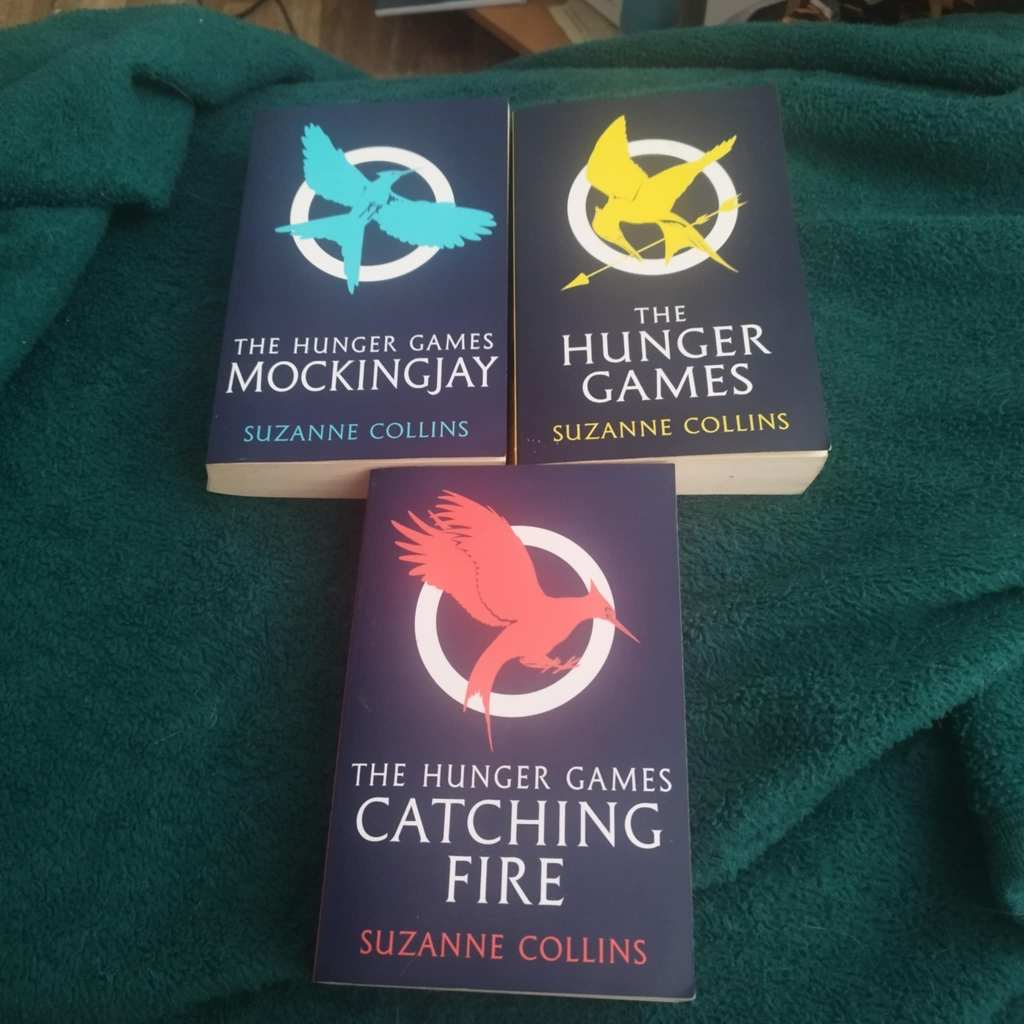
  • In terms of The Hunger Games fandom, I would be considered to be somewhat of a newcomer. I first picked up the books a year ago, and I was so engrossed in the story and the world created by Suzanne Collins that I read the then four book series in a matter of days. Despite my limited experiences with the series, when a second prequel, this time focusing on a younger Haymitch Abernathy, was announced, I was so excited to read his story that I accidentally bought myself two copies of the book! After reading Sunrise on the Reaping in a similar timespan as the other books, I can confirm that the latest story from Panem is as enthralling and emotionally devastating as all four books that came before it.

    Although returning fans of the series may already know the identity of the winner of the second Quarter Quell, the build up to, and the event of the games, is filled with intrigue, propaganda, and mind-breaking twists. Where Sunrise on the Reaping excels most is through the characters involved, both new and returning. As the Second Quarter Quell doubles the number of tributes to 48, from the usual 24, Haymitch is faced with not only more potential allies, but more potential enemies, and the gradual building of alliances and feuds brilliantly sets the stage for what is to come in the games themselves. Haymitch also finds new and unexpected allies and enemies outside of the games, as he becomes enshrouded in the ever-twisting politics of the Capitol, whilst being ever haunted in the shadows from the threats of the villainous President Snow.

    Ever since the story of Katniss reached its conclusion in 2010, fans have clamoured to see the backstory for her mentor, Haymitch. And the story does not disappoint, as not only does it provide the audience with important context to his actions in the events of The Hunger games, but it also provides the audience with information and context about the actions of several important characters in the series, who will go unnamed in this review to keep them a surprise for anyone who has not read the book yet.

    After taking a break from the typical first-person narration in The Ballad of Songbirds and Snakes, it comes back in great form in Sunrise on the Reaping. And it is absolutely the correct decision. Although the narrative of the first prequel is perfectly placed to enhance the feeling of separation between the residents of the Capitol through Snow, and the tributes, people of the districts and Lucy Gray, the return to first-person allows the story to excellently show the change in Haymitch as he reacts to, and evolves with, the horrific events he encounters.

    As with the other books in the series, Sunrise on the Reaping is laced heavily with the running themes of power and compliance. The power of the Capitol is not only shown through the vast disparity in wealth and technology between them and the districts, but also through the actions of the villains in charge of the hunger games. The ever-scheming villains target their ever-oblivious targets viewing the events of the book with a coordinated array of propaganda, fake news, and deepfakes that can’t help but feel eerily similar to certain elements of real-world politics. Although compliance is woven into the world through the actions of the citizens of Panem, as the tributes reluctantly all take part in the brutality of the games, whilst the rest watch, either gleefully or reluctantly, the signs of the resistance seen in the Hunger Games trilogy are clear to see. Through small acts of resistance to the background scheming of dissenting politicians, the seeds of revolution are excellently planted here.

    A single spark can cause a raging inferno, and a single injustice, a single voice speaking out, can cause a revolution. Sunrise on the Reaping is not only a masterpiece of a dystopian tragedy, wrapped in poetry and pain, but also a powerfully relevant message of hope in a time of division, disinformation, and deepfakes. As unlikely as it can seem, the bad times don’t last forever, even the reigns of the cruellest dictators come to an end, one way or another. In Sunrise On The Reaping, Suzanne Collins has delivered an excellent prequel, which not only gives the fans the story they have desperately wanted since the end of her original trilogy but also provides valuable new context to the actions of multiple important characters in the series. I don’t know whether any more books or stories are planned in the Hunger Games series, but I certainly hope we will get to see many more tales from Panem in the future.